

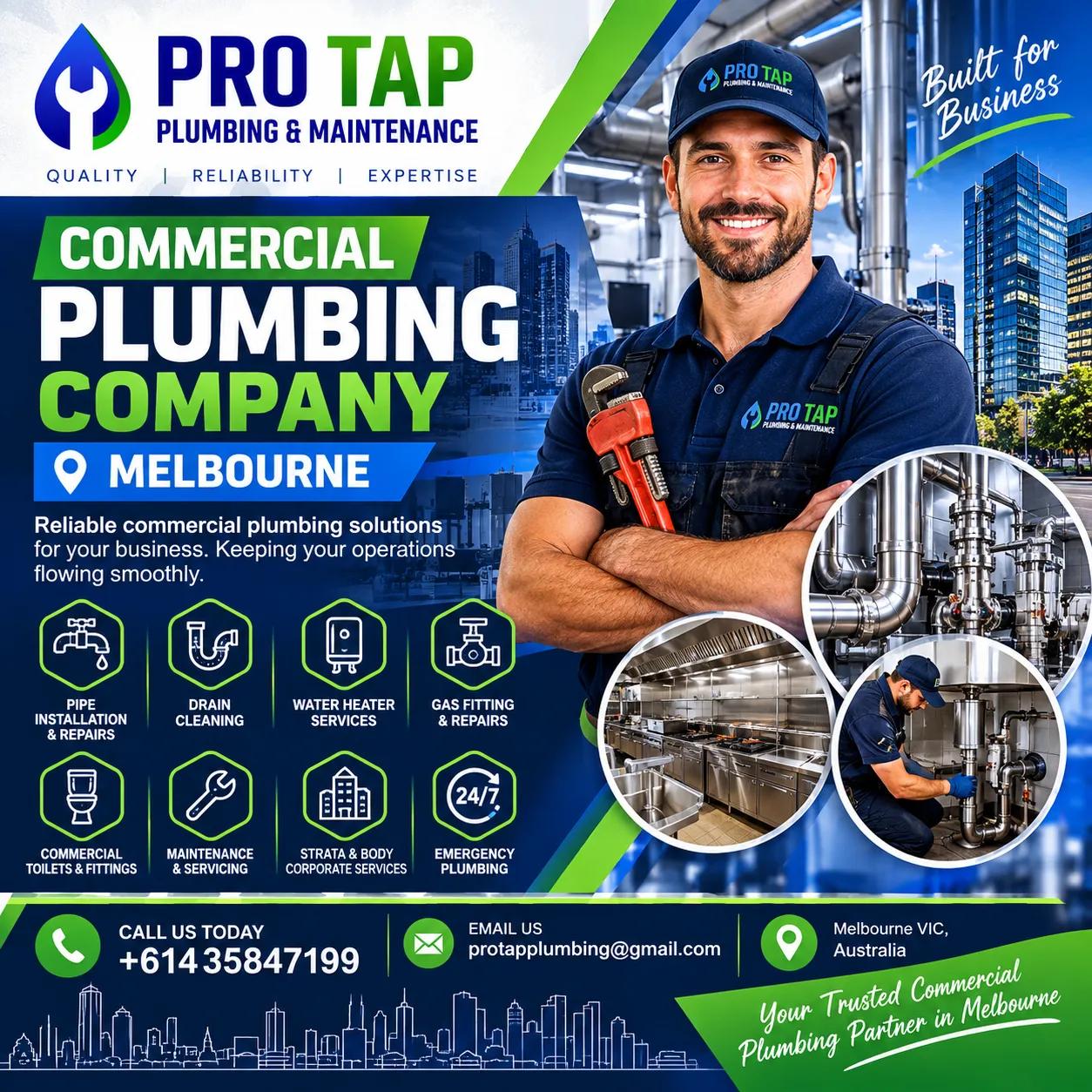
commercial plumbing companies in melbourne
Commercial plumbing plays an essential role in keeping businesses, retail spaces, offices, warehouses, restaurants, and other commercial properties operating safely and efficiently. Unlike residential plumbing, commercial systems often involve larger pipe networks, higher water demand, complex drainage infrastructure, and stricter maintenance requirements. When something goes wrong, even a relatively small plumbing problem can interrupt business operations.
For property owners and facility managers searching for commercial plumbing companies in Melbourne, choosing the right service provider requires more than simply selecting the first company that appears in a search result. Businesses need plumbers who understand commercial environments, respond efficiently, follow relevant regulations, and can identify problems before they develop into costly repairs.
Whether you are managing a retail premises, office building, hospitality venue, or industrial property, understanding what to look for in a commercial plumbing company can make the decision much easier.
Look for Commercial Plumbing Experience
Commercial plumbing requires a different approach from residential plumbing. A commercial property may have multiple interconnected systems, higher usage levels, and operational requirements that make downtime particularly disruptive.
When comparing commercial plumbing companies in Melbourne, investigate whether the provider has experience working with properties similar to yours. Relevant experience can include retail stores, restaurants, offices, warehouses, medical facilities, strata properties, and industrial premises.
An experienced commercial plumber should be comfortable dealing with issues such as:
Blocked commercial drains
Sewer and wastewater problems
Burst or leaking pipes
Water-pressure issues
Hot-water system faults
Backflow prevention
Commercial bathroom plumbing
Stormwater drainage
Preventive plumbing maintenance
Plumbing installations and upgrades
Experience is particularly valuable when diagnosing recurring problems. Instead of repeatedly treating the visible symptom, a knowledgeable plumber can investigate the underlying cause.
For example, a drain that repeatedly becomes blocked may have an underlying issue involving damaged pipework, poor drainage design, excessive grease, tree-root intrusion, or inadequate capacity. Identifying the cause can prevent repeated disruption and unnecessary repair costs.
Check Licensing, Compliance and Professional Standards
Commercial plumbing work should be completed by appropriately licensed professionals and in accordance with applicable Australian requirements. Businesses should therefore verify licensing and ask questions about compliance before engaging a contractor.
Depending on the type of plumbing work, different standards, regulations, permits, and compliance requirements may apply. A professional plumbing company should understand the relevant requirements and communicate clearly about any approvals or documentation that may be necessary.
Businesses should also consider whether the plumbing provider maintains appropriate insurance. This can provide an additional level of protection when contractors are working on commercial premises.
A professional provider should be willing to explain:
Whether the plumbers are appropriately licensed
What work is included in the service
Whether permits or approvals are required
How compliance is managed
Whether relevant documentation is provided
What safety procedures are followed
These questions can help separate established professional services from contractors who may not be adequately prepared for commercial work.
Consider Response Times and Emergency Support
Plumbing emergencies can have a significant impact on commercial operations. A burst pipe, overflowing drain, major leak, or sewer problem can potentially damage stock, equipment, flooring, walls, and electrical infrastructure.
For businesses searching for best commercial plumbing companies near me, availability should therefore be considered alongside technical expertise.
A useful commercial plumbing provider should have a clear process for handling urgent situations. Businesses should know whom to contact, how quickly assistance may be available, and what immediate steps should be taken while waiting for professional help.
For example, if a significant water leak occurs, staff may need to isolate the water supply if it is safe to do so, protect valuable equipment, move stock away from affected areas, and restrict access to the damaged area.
However, emergency response is not simply about arriving quickly. The plumber must also be able to diagnose the problem, control the immediate damage, and determine whether further repairs are required.
This is why businesses should evaluate emergency capabilities before an emergency actually happens.
Compare Preventive Maintenance Options
One of the most effective ways to reduce unexpected plumbing disruption is preventive maintenance.
Rather than waiting for a blocked drain, leaking pipe, or failing hot-water system to interrupt operations, businesses can schedule inspections and maintenance based on the property's needs.
A commercial plumbing maintenance program may include:
Inspection of visible pipework
Drain and sewer assessments
Leak detection
Water-pressure checks
Hot-water system inspections
Fixture and tap checks
Backflow prevention assessments
Drain cleaning
Identification of corrosion or pipe deterioration
The frequency of maintenance depends on the building, its plumbing infrastructure, occupancy, water usage, and type of business.
For example, hospitality businesses often experience heavier drainage and grease-related demands than many office environments. Retail premises may have different requirements depending on customer traffic and the number of bathrooms and facilities.
Preventive maintenance can also help property managers identify minor problems before they become major failures.
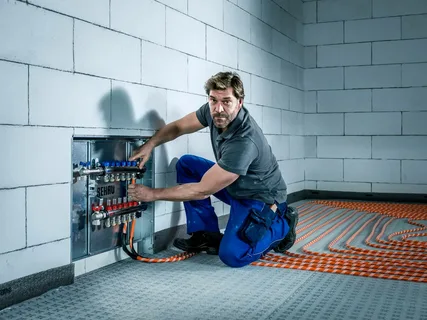
Ask About Technology and Diagnostic Methods
Modern plumbing services increasingly use technology to identify problems more efficiently. This can be particularly useful in commercial properties where plumbing infrastructure may be extensive or difficult to access.
Depending on the situation, plumbers may use equipment such as drain cameras, electronic leak detection systems, pressure testing equipment, and specialised drain-cleaning machinery.
Camera inspections, for example, can provide valuable information about the internal condition of drainage pipes without immediately requiring extensive excavation. They may help identify cracks, blockages, tree-root intrusion, collapsed sections, or other structural problems.
Technology does not replace professional experience, but it can improve diagnosis and reduce unnecessary investigative work.
When evaluating a local commercial plumbing service near me, businesses can ask what diagnostic methods are available and whether the provider uses appropriate equipment for complex commercial problems.
Consider Communication and Documentation
Technical expertise is important, but communication also plays a major role in commercial plumbing.
Property managers and business owners need to understand what has happened, what work is recommended, and what could happen if the problem is left unresolved. Clear communication helps decision-makers plan repairs while reducing misunderstandings.
A professional commercial plumbing provider should ideally provide useful information such as:
Description of the identified problem
Recommended repair or maintenance work
Explanation of the likely cause
Estimated scope of work
Relevant compliance information
Maintenance recommendations
Documentation where appropriate
Good record-keeping is particularly useful for businesses with multiple properties. Maintaining records of plumbing repairs, inspections, recurring problems, and maintenance schedules can help identify patterns and support long-term asset management.
For Melbourne businesses looking for a provider, Pro Tap Plumbing and Maintenance is one example of a local plumbing service that can be considered when assessing commercial plumbing requirements.
Common Commercial Plumbing Challenges
Commercial properties can experience several recurring plumbing challenges. Understanding these problems can help businesses develop better maintenance strategies.
Blocked drains: High usage, foreign materials, grease, and inadequate drainage can contribute to blockages. Regular inspections and appropriate drain maintenance can reduce the likelihood of serious obstruction.
Hidden leaks: Small leaks behind walls, beneath floors, or within ceilings may remain unnoticed until significant damage occurs. Monitoring water usage and investigating unexplained increases can help identify potential leaks.
Low water pressure: Pressure problems can result from damaged pipes, supply issues, faulty valves, or problems within the building's plumbing system. Professional testing is often required to determine the cause.
Hot-water failures: Businesses that depend on hot water can experience operational disruption when systems fail. Scheduled inspections can help identify signs of deterioration before complete failure occurs.
Recurring sewer problems: Repeated sewer blockages may indicate a deeper issue within the drainage system. Investigating the underlying cause is generally more effective than repeatedly clearing the same blockage.
Making the Right Choice for Your Business
Finding a suitable commercial plumbing provider is ultimately about assessing reliability, experience, compliance, communication, and long-term service capability.
Rather than focusing exclusively on search rankings or the lowest quoted price, businesses should consider the overall value of the service. A plumbing contractor who understands commercial infrastructure and provides preventative advice may help reduce operational disruption over time.
A simple evaluation checklist can include:
Is the plumber appropriately licensed?
Does the company have commercial experience?
Can it handle your property's specific requirements?
Is emergency assistance available when needed?
Does the provider offer preventive maintenance?
Are diagnostic technologies available?
Are repair recommendations clearly explained?
Is appropriate insurance maintained?
Can the company provide relevant documentation?
Does the provider communicate professionally?
Taking time to answer these questions can make it easier to identify a commercial plumbing service suited to the property's needs.
Conclusion
Choosing among commercial plumbing companies in Melbourne should be based on more than convenience. Commercial properties have complex plumbing requirements, and poorly managed issues can quickly affect employees, customers, stock, equipment, and daily operations.
Read More:
Kitchen Renovations Kew: A Complete Homeowner’s Guide
Need a 24 Hour Emergency Plumber Near Me? Here’s What to Know